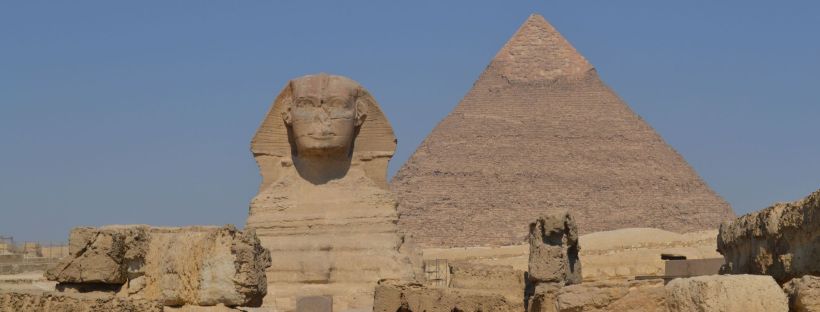
Camels, desert and pyramids: Egypt is still sometimes represented through a limited set of images. But art and culture can offer a much deeper understanding of the country and its identity.
During the event organised in collaboration with the Arabic Cultural Institute at Università Cattolica, we had the opportunity to interview Dr Rania Yehya, former Director of the Egyptian Academy of Fine Arts in Rome.
One of the central themes of our conversation was the persistence of stereotypes surrounding Egypt in Europe.
According to Yehya, reducing Egypt to camels, deserts and pyramids means overlooking the complexity of a civilisation with thousands of years of history and an extraordinary artistic, literary and cultural heritage.
Technology and social media have made cultures more accessible than in the past, but simplified representations still exist. This is why communicating a more authentic image of Egypt remains important.
ART AS A UNIVERSAL LANGUAGE
For Yehya, one of the most powerful tools for challenging stereotypes is art.
Even when people speak different languages, art can communicate emotions, identities and stories. In this sense, it can become a form of cultural diplomacy, bringing cultures closer without relying exclusively on political or institutional channels.
The example of Umm Kulthum illustrates this perfectly. Her music reached audiences outside the Arab world, demonstrating how artistic expression can cross linguistic and geographical boundaries.
Egyptian culture should also not be seen only through its ancient past. Artists such as Mahmoud Mokhtar demonstrated how historical symbols could be reinterpreted to represent a modern Egypt, creating a dialogue between heritage and contemporary identity.
WHAT SHOULD ITALIANS KNOW ABOUT EGYPT?
During the interview, we asked Dr Yehya what she would like young Italian students to understand better about Egyptian culture.
She emphasised the similarities between Egypt and Italy as countries shaped by ancient civilisations. Their histories demonstrate how cultures can meet, influence each other and create connections between people.
Egyptian culture, she explained, has influenced not only the Arab world but has also interacted with cultures beyond it, including Europe.
This relationship can be seen particularly clearly in cities such as Rome and Alexandria, where centuries of cultural exchange have left visible traces.
EVERYONE CAN CONTRIBUTE TO CULTURAL DIALOGUE
Yehya also stressed that cultural communication should not depend only on governments or major institutions.
Civil society, cultural organisations and individuals can all contribute. Today, smartphones and social media give people the opportunity to become small communication channels themselves, sharing their culture directly with international audiences.
For communication students, this carries an important message: the content we create can either reinforce stereotypes or help challenge them.
Asked to describe the relationship between Egyptian and Italian culture, Yehya chose five words:
“CIVILISATION. CULTURE. ART. HUMANITY. BEAUTY”
Her answer summarises the central message of the encounter: discovering another culture means going beyond its most familiar images and understanding the history, people and creativity behind them.
Amalia De Bernardo
Sara Rizzello


