
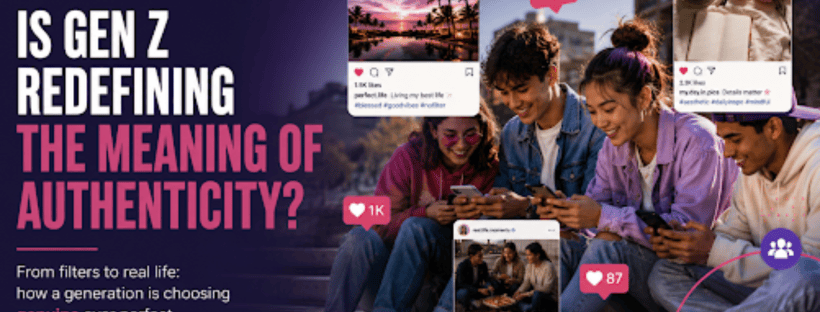
Gen Z is changing the rules of online communication by valuing transparency, imperfection and authenticity over polished perfection.
FROM HIGHLIGHT REELS TO IMPERFECTION
No filters, no perfect lighting, no second takes. Gen Z is rewriting what “real” means online and brands are struggling to keep up.
Older generations built their online presence around highlight reels: curated photos, careful captions, best angles only. Gen Z is visibly reacting against that model.
Apps built around unfiltered, spontaneous content, and the rise of “deinfluencing” videos that openly criticise overhyped products, show a generation that rewards imperfection instead of polish.
PRESSURE IS DRIVING THE SHIFT
Data confirms this is not just a niche trend.
The Pew Research Center reports that teens are highly active across multiple platforms and describe social media in mixed terms: useful for connection, but also a source of pressure to look and act a certain way. This awareness of the pressure is precisely what is pushing younger users to demand more unpolished content.
FLAWS FEEL MORE CREDIBLE
For Gen Z, authenticity is closely tied to transparency about flaws and limits. Admitting uncertainty, showing a messy process or disagreeing publicly with a trend is often read as more credible than a perfectly composed post.
This generation grew up watching influencer culture closely enough to recognise its scripts and reacts with scepticism when content feels too rehearsed.
WHEN AUTHENTICITY BECOMES A PERFORMANCE
This shift is not without contradictions. “Authentic” content can itself become a trend, planned and performed like any other.
A candid-looking video can be scripted just as carefully as a glossy one; the aesthetic of rawness does not automatically guarantee honesty. Gen Z is often aware of this paradox too, which keeps raising the bar for what counts as genuinely real.
BRANDS HAVE TO SOUND HUMAN
Brands targeting this generation have had to adapt their entire tone of voice.
Corporate, overly formal captions are increasingly replaced by humour, self-irony and direct replies to comments, because Gen Z tends to trust brands that sound like a person rather than a press release.
The companies that succeed here are usually the ones willing to admit a mistake publicly instead of deleting the evidence, since a visible, honest correction reads as more trustworthy than a spotless but suspiciously perfect record.
POLISH, BUT DON’T HIDE THE SEAMS
What is clear is that the rules have changed. Perfection used to signal credibility online; today, it is often imperfection that does.
For brands, educators and communicators working with younger audiences, this means one thing above all: polish carefully, but never hide the seams completely.
Getting this balance wrong is easy, which is exactly why understanding Gen Z’s new definition of authenticity has become a core communication skill rather than a passing trend to observe from a distance.
Claudia Cundari


