An exploration of Arabic literature, translation, and the extraordinary ability of art to connect people across languages, cultures, and generations.
Art has never needed a passport
A painting has the power to make an impact even when one knows nothing about the artist. A melody transports us to a point in time even if we do not understand the language of its lyrics. And a story, written centuries ago in a distant corner of the world, can still make a stranger feel like he isn’t alone in what he is feeling, what he is experiencing.
Literature carries this same extraordinary power. It is also art that allows us to experience lives we have never lived.
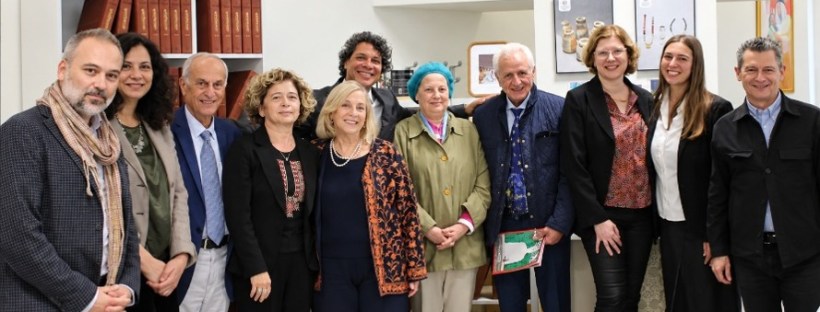
It was this spirit of artistic connection that resonated throughout a day dedicated to Arabic literature, translation, and intercultural dialogue, bringing together professors, researchers, and students to celebrate the beauty of literary expression and the people who help it travel beyond borders.
At the heart of the gathering was a tribute to Professor Isabella Camera d’Afflitto, whose contributions to Arabic literary studies and translation remain unparalleled and have helped introduce the richness of Arab storytelling to generations of European readers as well as scholars.
The Art of Giving Words a Second Life
Every literary work begins in a particular language, but the emotion behind it need not remain confined within the box of that particular language.
A poem written in Arabic may speak of longing, love, exile, or belonging. Through translation, those same emotions can find a home in Italian, Spanish, or countless other languages.
Translation, therefore, is not simply the replacement of one word with another. It is an artistic act of interpretation, requiring sensitivity to cultural nuance, historical memory, and the emotions woven into a writer’s voice.
One speaker captured this beautifully: “Tradurre significa anche trasferire conoscenze e culture.” Meaning, Translation also means transferring knowledge and cultures.
Throughout the discussions, translation emerged as an art that gives literature new audiences and new possibilities.
A Mediterranean of Stories
For centuries, the Mediterranean has witnessed the movement of people, languages, ideas, and artistic traditions.
Its shores have been home to poets, philosophers, travelers, and storytellers whose works have shaped cultures far beyond their places of origin.
During the event, reflections on the literary relationship between Italy, Egypt, and Spain revealed how deeply connected these traditions have been.
The Mediterranean, in this sense, is not merely a sea separating continents. It is also a space where stories have traveled, cultures have encountered one another, and artistic traditions have influenced each other across generations.
Literature Is More Than What Is Written on a Page
Another memorable reflection challenged the idea that literature can be confined to a few familiar forms.
“La letteratura non è solo poesia, non è solo poesia classica, non è solo romanzo.” Meaning, Literature is not only poetry, not only classical poetry, not only the novel.
Literature also lives in theatre, magazines, contemporary writing, and the many forms through which people express their experiences. It evolves with society, responding to changing identities, migration, memory, and the search for belonging.
The speakers reflected on the importance of looking beyond established literary traditions to recognize voices and artistic forms that may have received less attention.
Their discussions offered a reminder that art is never entirely static. It grows through experimentation, cultural encounters, and the willingness of new generations to tell their stories differently.
To appreciate literature is not simply to preserve its past, but also to remain curious about the forms it continues to take.
Where Stories Continue
As the day drew to a close, what remained was more than a collection of academic presentations.
It was a celebration of stories and the people who dedicate their lives to keeping them alive, sharing them, and carrying them into new cultural spaces.
The reflections on Arabic literature, translation, and the legacy of Professor Camera d’Afflitto revealed how artistic expression can outlive geographical boundaries and continue to inspire readers across generations.
And perhaps that is the enduring magic of literature.
Languages give stories their voices. Translation gives them new journeys. And art gives them the power to touch lives beyond borders.
Samyukta Parackal Chacko


