We don’t become different people online. We simply adapt the same identity to different audiences and situations.
MORE VERSIONS OF THE SAME PERSON
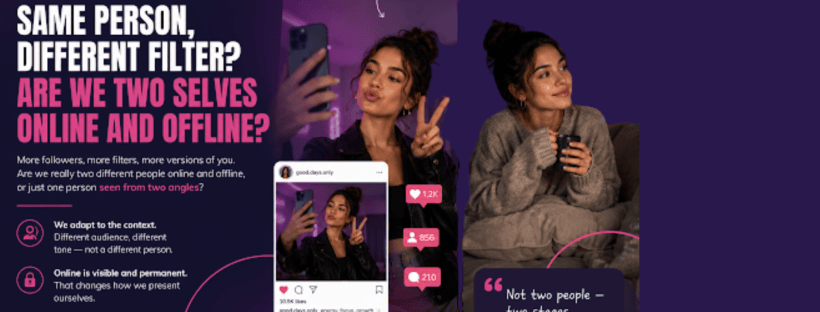
More followers, more filters, more versions of you. Are we really two different people online and offline or just one person seen from two angles?
The idea of a split self is tempting: a bold,witty “online you” and a quieter, more ordinary “offline you“. In reality, most people are not living double lives; they are adjusting the same identity to different contexts.
WHAT CHANGES ONLINE
This is not new or unique to the internet: people have always spoken differently to a boss, a friend or a grandparent, without becoming a different person each time. What changes online is visibility and permanence.
A comment made offline disappears; the same comment made online can be searched, screenshotted and judged out of context years later. This raises the stakes of self-presentation and can push people toward safer, more polished versions of themselves, which then look more distant from daily life than they really are.
ONE MORE STAGE, THE SAME SCRIPT
The concept of an entirely separate “digital self”, explored in Erving Goffman’s classic theory of self-presentation, is better understood as one more “stage” added to the many we already perform on.
Online and offline selves are two performances of the same script, not two different scripts.
WHEN THE GAP BECOMES A MASK
Where the gap becomes a real problem is when the two performances start to contradict each other.
An online persona that consistently hides struggles, opinions or personality traits present in daily life is no longer an adjustment, but a mask. That gap is exhausting to maintain and, when noticed by others, is exactly what damages trust and credibility.
ADAPTING WITHOUT DECEIVING
Age and platform also shape how wide this gap tends to be. Professional platforms like LinkedIn encourage a more formal performance, while close-friend stories or private groups allow a rawer one, and most people move fluidly between the two without feeling dishonest.
The difference only becomes a red flag when someone actively deceives an audience about who they are, rather than simply adjusting tone to fit the room.
BUILD CONSISTENCY, GAIN AUTHENTICITY
So, are we different online and offline? Slightly, and that is normal. The healthiest approach is not eliminating the difference, but keeping it small enough that both versions are still recognisably the same person.
Consistency, not identical behaviour, is what makes an identity feel authentic across contexts, and it is a far more realistic goal than trying to be exactly the same everywhere all the time.
Claudia Cundari


