
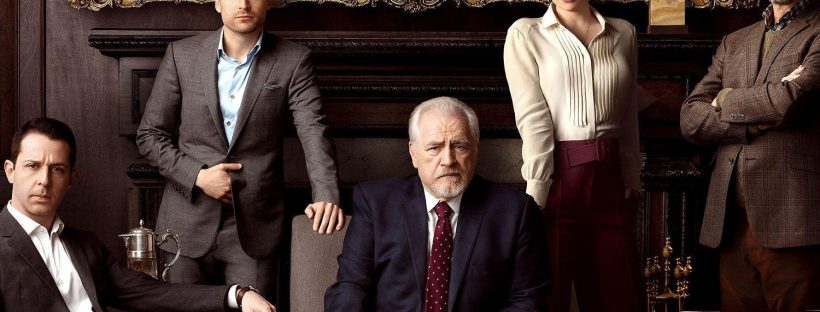
The HBO hit series Succession has propelled the quiet luxury trend like no other cultural phenomenon in recent years. While the show centers on the Roy family’s power struggles, business dealings, and personal conflicts, fashion has become an inseparable part of its identity.Interestingly, brand names are never explicitly mentioned, nor is clothing treated as a central narrative element. Yet labels such as Loro Piana and Bottega Veneta have become closely associated with the series.This raises an intriguing question: how can a brand gain cultural relevance without ever being directly named?
A TREND IS LAUNCHED
Quiet luxury provides the answer. Rather than relying on logos or bold designs, the brands linked to this trend sell something far less tangible: status. In Succession, viewers rarely see statement pieces, loud prints, or visible branding. Instead, the characters wear understated, minimalist clothing; neutral tones, perfectly tailored silhouettes, and high-quality fabrics. Nothing about these outfits is immediately recognizable, yet everything about them signals wealth.
QUIET BUT STILL VISIBLE
This apparent contradiction is key to understanding the phenomenon. The Roy family represents a level of wealth that exists beyond traditional status signaling. For them, logos are unnecessary, even undesirable. Their clothing reflects an unspoken rule: true wealth does not need to announce itself. In this way, quiet luxury distinguishes itself from more conventional forms of luxury by rejecting visibility and focusing instead on quality, craftsmanship, and price.
EXCLUSIVITY INSTEAD OF ACCESSIBILITY
From a marketing perspective, this creates a powerful dynamic. Quiet luxury operates through exclusivity and subtlety rather than mass visibility. High price points (such as a seemingly simple white shirt costing several hundred euros) combined with minimal branding create a sense of inaccessibility. These products are not designed to be immediately recognized by everyone, but rather by a select group of “insiders” who understand their value. The marketing is done through exclusivity.
Succession amplifies this effect. By dressing characters who belong to the ultra-wealthy elite in these understated brands, the series embeds them within a narrative of power and influence. The Roys do not discuss fashion, nor do they appear concerned with their appearance. Ironically, this very indifference heightens the audience’s awareness. Viewers begin to pay closer attention, decoding fabrics, cuts, and styles, and associating them with a specific kind of elite status.
In a media landscape saturated with logos and overt advertising, invisibility becomes a marker of exclusivity. Quiet luxury, therefore, is not just an aesthetic trend, but a strategic repositioning of luxury itself. One that replaces recognition with discretion and transforms absence into desirability.
Sophia Bouhaha


