
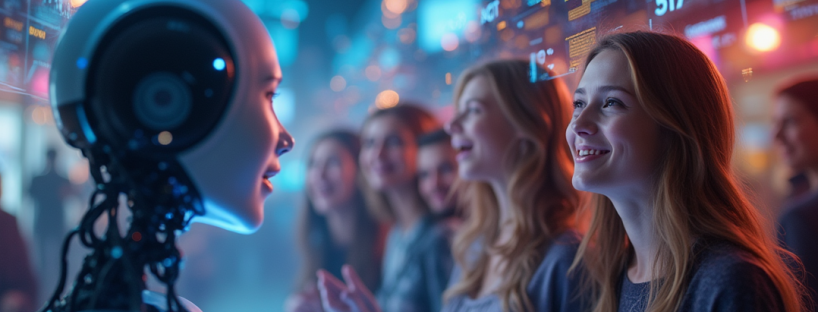
Artificial intelligence has deeply penetrated every aspect of human life: from writing, to medical checks, and has eventually entered the traditional and non-traditional advertisements. However, AI-generated advertisements have an impact on the way consumers receive the message and the emotions correlated, as perception shifts.
AI IN COMMERCIALS: A NEW REALITY
AI is no longer confined outside commercials: from an unexplored tool, nowadays AI is reshaping the way brands communicate to customers. Many brands have already experimented with artificial intelligence in their commercials, but not without repercussions on the message’s reception, often receiving back perplexity and disagreement from the audience.
COCA-COLA: FROM MAGIC TO APATHY
Coca-Cola has a very strong and distinguished identity: red, passion, refreshing, all with a touch of magic. In fact, Coca-Cola started being associated with Christmas after a successful campaign aimed at selling the product in winter time. From then on, the brand is a symbol of joy, party and family reunions. But what happened when it started making commercials without real characters, but only with AI-generated images? The answer is that magic ended. If we take into consideration the latest Coca-Cola AI-generated ads, Holidays Are Coming, we cannot perceive any magic, just some winter landscape but without the real and authentic Coca-Cola’s spirit.
This happens when AI is perceived as not authentic, sharply dividing the real from the digital world. Moreover, people often are unable to feel deep emotions with AI-generated videos because the content lacks genuine human experience, soul, and subtle imperfections, leading to a cognitive and emotional disconnect. When an AI video is almost, but not quite, perfect, it triggers a psychological phenomenon known as the uncanny valley, that makes us focus just on the missing part. For instance, if we look at a fictional character, it does not matter if it is 98% human-like, our brain will focus on just the 2% that seems fake, making deep connection impossible.
IS IT ALWAYS LIKE THAT?
Sometimes, AI can be good at camouflaging. For Chinese New Year 2026, Maserati launched a global campaign, created by the agency DUDE Milan and produced by Studio FM, titled The Year of Balance. This campaign is a great example of fully AI-generated commercials that appear real. Here, AI is not the protagonist of the spot: emotions are perceived as authentic, even though they are represented by AI, thanks to an intelligent and sophisticated use of it. In this way, a new horizon emerges: the one of connection and emotions, in which AI is not hidden, but explicitly there, thanks to aesthetic choices that make its presence obvious. As a result, the audience can still connect with the message, even if the images are almost fully AI-generated, with the exception of the shots of the car. This balanced blend was also made possible by the expertise of human professionals that managed all phases of production, casting a real person to create the protagonists’ digital twins to maintain an ethical, human-centric approach.
AI in advertising is not inherently ineffective, but its impact depends on how it is used. When it replaces human presence entirely, it risks creating emotional distance and breaking brand identity. However, when it is integrated thoughtfully, it can enhance creativity while preserving emotional connection. Ultimately, the future of AI in commercials lies in balance: not between human and machine, but between technology and authenticity.
Viola Spreafico

 CIMO
CIMO 