
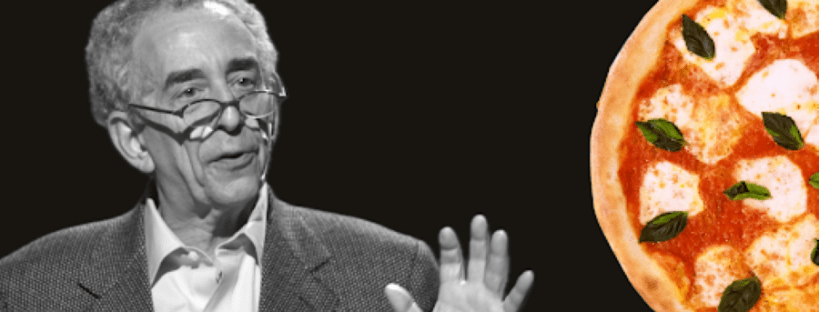
The more toppings you can put on your pizza, the more you feel indecisive and struggle with the decision-making process. The paradox of choice, a theory developed by the psychologist Barry Schwartz in the 2000s, explains why this phenomenon occurs.
Modern life is defined by abundance. We always have several alternatives, whether we want to read, dress, eat or perform different activities. This may be thought of as empowering, but psychological research shows the opposite: too many choices make us feel stressed, demotivated and exhausted.
The choice overload is, indeed, strongly linked to our behavior, influenced by the quantity of alternatives between which we must choose.
Paradoxically, more freedom often results in less happiness. The paradox of choice, is a concept introduced by the psychologist Barry Schwartz in 2004, with the publication of his book “The Paradox of Choice – Why More Is Less”. According to him, the more options we have, the more difficult the choice is.
Many daily tasks can be affected by this strange phenomenon: from choosing how to dress, to buying a pizza. In a bunch of alternatives, how are we supposed to know what to choose?
This pattern is often used to understand the decision-making process in customer behavior studies. Moreover, this paradox can be useful when trying to understand how people make choices.
For example, when faced with overwhelming assortments, many consumers experience decision paralysis and avoid choosing altogether. Others act impulsively, selecting something quickly just to escape the discomfort of evaluating multiple options. Some rely on familiar brands to avoid uncertainty, while others suffer post-purchase regret because they cannot stop comparing their choice to what might have been.
Psychologically, this phenomenon explains why these reactions occur. Our mental energy is limited and choice overload and decision-making processes require a strong cognitive effort, especially when the choice is related to a high-risk situation.
However, we are required to make choices during our daily life, in our most ordinary moments: from scrolling for hours for something to watch, to staring at supermarket shelves to find a product, or hesitating between menu choices.
These ‘mico-choices’ between too many alternatives can make us feel exhausted because they significantly reduce our mental energy, often resulting in health issues.
Recognizing the impact of excessive choice can help individuals adopt a more intentional approach to decision-making. For brands, it highlights the importance of curated experiences and simplified offerings.
Ultimately, in a world overflowing with possibilities, learning to navigate choice wisely becomes a key element of psychological balance and everyday satisfaction.
Photo: Barry Schwartz photographed by Bill Holsinger-Robinson, February, 7th 2009


